Decoding the ISPS Code
1. What is the ISPS Code and Why Does it Matter?
Many professionals in the yachting industry view the regulations as “ill-considered bureaucracy,” but until they are repealed, they carry the force of international law. The International Ship and Port Facility Security (ISPS) Code is a comprehensive set of measures to enhance maritime security, adopted by the International Maritime Organisation (IMO) as part of the SOLAS Convention, Chapter XI-2. It provides a standardized international framework for detecting security threats and taking preventative measures against security incidents affecting ships or port facilities used in international trade. The Code’s primary objectives are to:
-
- Prevent unauthorized access to ships, port facilities, and their restricted areas.
-
- Prevent the introduction of unauthorized weapons, incendiary devices, or explosives.
-
- Provide a means for raising the alarm in reaction to security threats or security incidents.
-
- Require ship and port facility security plans based upon formal security assessments.
-
- Require training, drills, and exercises to ensure familiarity with security plans and procedures.
2. The Three Pillars: Understanding Maritime Security Levels
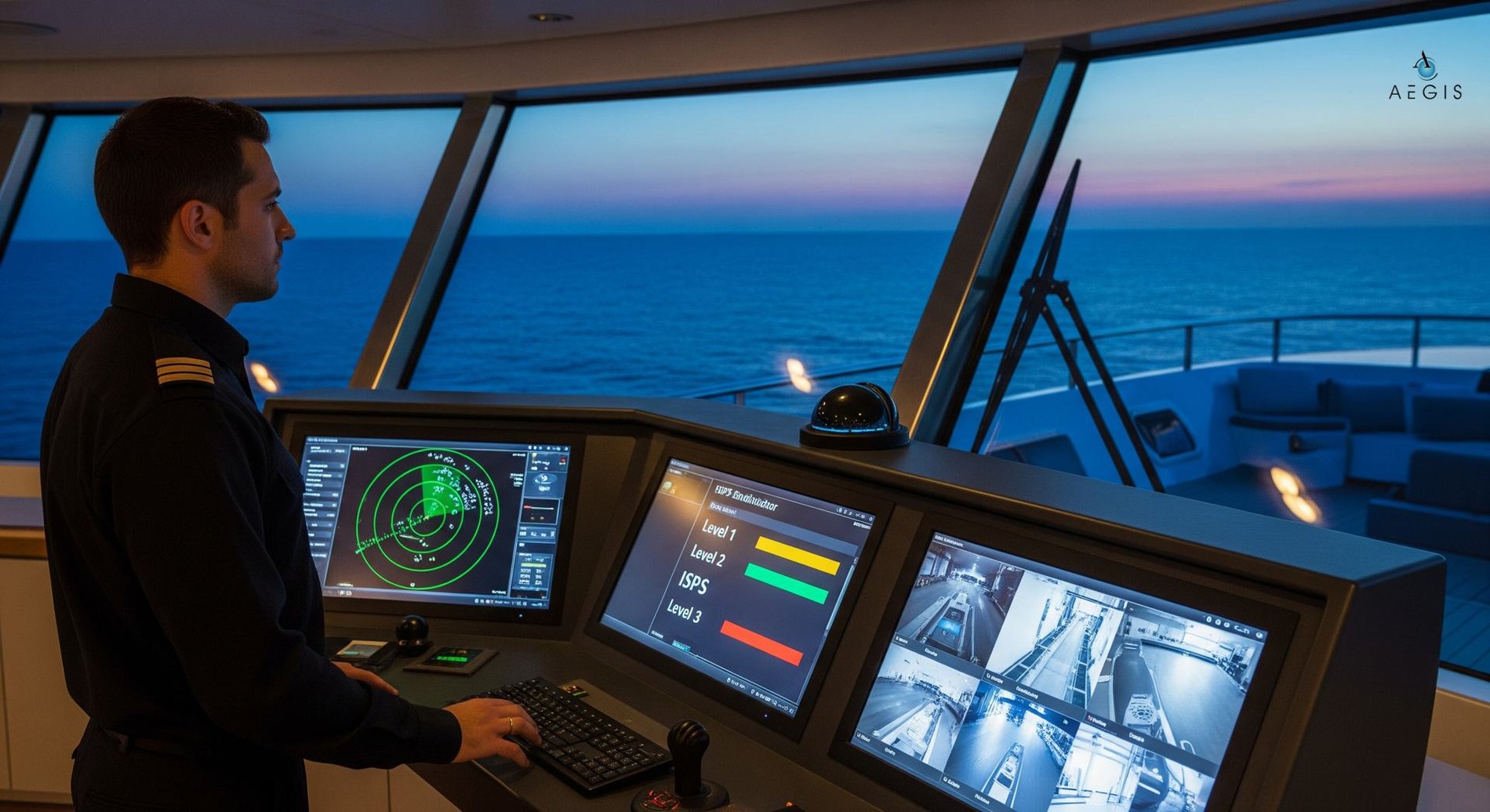
2.1. Security Level 1: Standard Vigilance
This is the normal, day-to-day operational level where minimum appropriate protective security measures are maintained at all times. Typical actions required at this level include:-
- Controlled Access: Ensuring only authorized personnel, guests, and contractors can board the vessel.
-
- ID Verification: Verifying the identity of all persons boarding and confirming their reason for being there.
-
- Restricted Area Monitoring: Keeping a close watch on sensitive zones of the yacht to prevent unauthorized entry.
-
- Supervised Cargo Handling: Overseeing the loading and unloading of all supplies, stores, and baggage.
2.2. Security Level 2: Heightened Risk
Security Level 2 is implemented for a sustained period when there is a heightened risk of a security incident. This level requires additional, more stringent protective measures as detailed in the yacht’s Ship Security Plan (SSP). These additional measures typically include:-
- Increased Patrols: Enhancing the frequency and visibility of security patrols around the vessel and on deck.
-
- Restricted Access Windows: Limiting the times when guests, contractors, or other personnel can board.
-
- Increased Screening: Implementing more thorough and frequent screening of personnel, baggage, and stores being brought aboard.
2.3. Security Level 3: Imminent or Probable Threat
This is the highest level, applied for a limited time when a security incident is probable or imminent, even if a specific target cannot be identified. It triggers the most stringent protective measures. A critical action at this level may involve changes to the ship/port interface, which refers to all interactions between the vessel and the port, including the boarding and disembarking of personnel, loading of stores, and bunkering operations. Key actions at Security Level 3 include:-
- Suspension of Ship/Port Interface: Potentially ceasing all non-essential interactions with the port, which may include suspending all boarding, disembarking, and cargo operations.
-
- Coordination with State Authorities: Working directly with government security forces and response teams.
3. Your Role in the Plan: The SSO and the SSP
3.1. The Ship Security Officer (SSO)
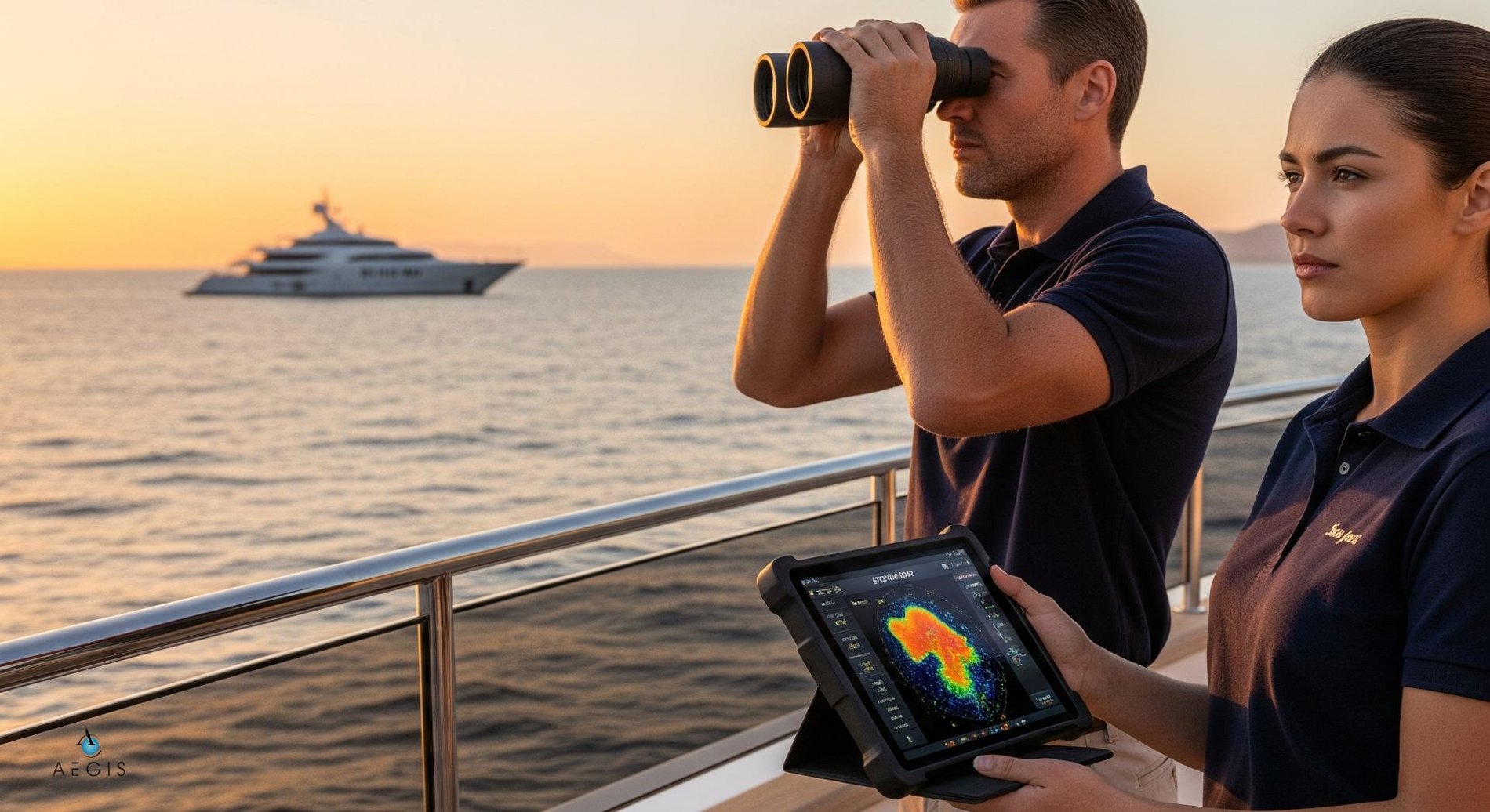
The Ship Security Officer (SSO) is the person on board accountable to the Master for the security of the yacht. The SSO is your direct point of contact for all security matters. This officer liaises with the shore-side Company Security Officer (CSO) and the Port Facility Security Officer (PFSO) to ensure security is coordinated seamlessly between ship and shore. For the crew, this means the SSO is responsible for ensuring you receive the proper training for your duties, whether that’s Proficiency in Security Awareness (PSA) for all crew members or Proficiency in Designated Security Duties (PDSD) for those with specific roles like gangway watch or baggage screening.3.2. The Ship Security Plan (SSP) and Regular Drills
The Ship Security Plan (SSP) is the central document that details the specific security measures for all three security levels. It’s crucial to understand that the SSP is not a generic template; it is developed based on a formal Ship Security Assessment (SSA)—an in-depth risk analysis of your specific yacht—and must be approved by the vessel’s flag administration. Remember, the SSP is a living document, not a binder that gathers dust on a shelf. Its effectiveness depends entirely on the crew’s ability to execute it under pressure. That is why regular drills and exercises are mandatory. The objective is to build muscle memory and ensure every crew member is proficient in their assigned duties, from responding to an attack at berth to handling the discovery of an explosive device or a hijacking scenario. From the Trainer’s Desk: Don’t treat drills as just another checklist item. A common point of failure is a lack of realism. The SSO should simulate practical scenarios, such as an unauthorized drone sighting, a suspicious package delivery, or an attempted breach of the gangway. The goal is to build instinct so the crew reacts effectively under real pressure.4. Beyond the Code: The Critical ‘Human Factor’ in Yacht Security.
4.1. Identifying Warning Signs of Workplace Violence
A proactive aspect of security is recognizing potential threats from within the crew. While rare, workplace violence is a serious issue. Security publications like ASPIS Magazine provide training to help senior crew identify potential warning signs among personnel to prevent incidents before they escalate. Key indicators include:-
- Power obsession
-
- Victim attitudes
-
- Clinical paranoia