Introduction: The Hidden Dangers of Paradise
The image of a superyacht evokes a world of ultimate luxury and peaceful isolation—a gleaming white vessel cutting through serene, turquoise waters, far from the complexities of modern life. It is a private sanctuary, a floating haven where the only concerns are the day’s itinerary and the evening’s menu. But this idyllic picture hides a far more complex reality.
While we might imagine security threats in the form of movie pirates with eye patches and cutlasses, the most significant dangers facing these vessels today are often invisible. They are digital, environmental, and surprisingly bureaucratic. This article will reveal five of the most impactful truths about what it takes to keep a superyacht safe in the 21st century, drawing on insights from security professionals, official reports, and real-world incidents.
1. The Biggest Threat Isn’t a Pirate, It’s Your Wi-Fi
Cyber threats have officially surpassed traditional piracy as the primary security concern for the superyacht industry. These vessels are no longer just opulent cruisers; they are “floating tech hubs” and “mobile data centers,” with a complex web of interconnected systems managing everything from navigation and engines to climate control and guest entertainment.
The old myth of “security at sea” is dangerously misleading. A modern yacht’s constant reliance on satellite, Wi-Fi, and cellular networks creates multiple attack vectors for malicious actors. Historically, the networks for critical navigation systems (Operational Technology or OT) were kept separate from those used for entertainment (IT). Today, they are “frequently combined,” creating digital pathways for hackers to exploit. The consequences of a single compromised device—brought aboard by a guest, crew member, or even a third-party vendor—can lead to “catastrophic operational, financial, and reputational damage.”
These are not theoretical risks. Real-world incidents have already demonstrated the profound vulnerability of the maritime sector:
- MarineMax (2024): A ransomware attack on the U.S. yacht dealer compromised the sensitive data of over 123,000 people.
- Lürssen (2023): The renowned German yacht builder was forced to shut down its shipyard operations after a sophisticated ransomware attack crippled its systems.
- Live Hacking Demo (2017): During a conference in London, a security expert demonstrated how easily a yacht could be compromised by hacking its satellite communications, Wi-Fi, and navigation systems in a matter of minutes.
The gap between perception and reality is stark.
According to a recent PSPI report, nearly 70% of superyacht owners lack full awareness of their vessels’ cyber vulnerabilities.
In the digital age, the greatest vulnerability is no longer the vast, isolating ocean but the invisible, ever-present connection to the shore. A single unsecured laptop can now breach a vessel more effectively than a pirate skiff on the horizon—and is far harder to spot.
2. Your GPS Can Lie, Creating “Digital Mirages” at Sea
One of the most insidious new threats is not a physical weapon, but a digital one: electronic warfare. GPS jamming and spoofing, once the domain of military operations, are now a clear and present danger to commercial and private vessels, capable of manipulating a ship’s perceived location with terrifying precision.
The scale of the problem is staggering. In the second quarter of 2025 alone, GPS jamming affected over 13,000 vessels globally, with incidents spiking dramatically during the brief but disruptive Iran-Israel conflict.
The Mediterranean, long considered a safe cruising ground, has seen a dramatic spike, with the number of affected vessels surging from zero in early 2024 to over 1,000 by mid-2025.
This electronic interference can create what security analysts call a “digital mirage.” By falsifying positioning data, spoofing attacks can make a vessel’s navigation systems believe it is miles away from its actual location. A stark example is the collision involving the VLCC Front Eagle, where AIS data falsely placed the massive tanker onshore in Iran, a digital illusion that masked its true position and directly compromised navigational safety.
This technology is also being used for explicitly malicious purposes. To circumvent international sanctions, tankers have been observed entering sanctioned Russian ports while their AIS broadcasts falsified positions hundreds of miles away, off the coasts of Bulgaria or Romania. For a captain, the implications are terrifying. The very instruments they rely on for safe passage can be turned against them, blurring the line between digital reality and physical danger.
3. Anchoring in the Wrong Spot Carries a €150,000 Fine
Not all threats involve high-tech criminals or geopolitical conflict. Some of the most severe risks today come from an unexpected source: environmental regulations. In popular cruising grounds like the Mediterranean, protecting fragile marine ecosystems has become a major security issue with financial penalties steep enough to ruin a season.
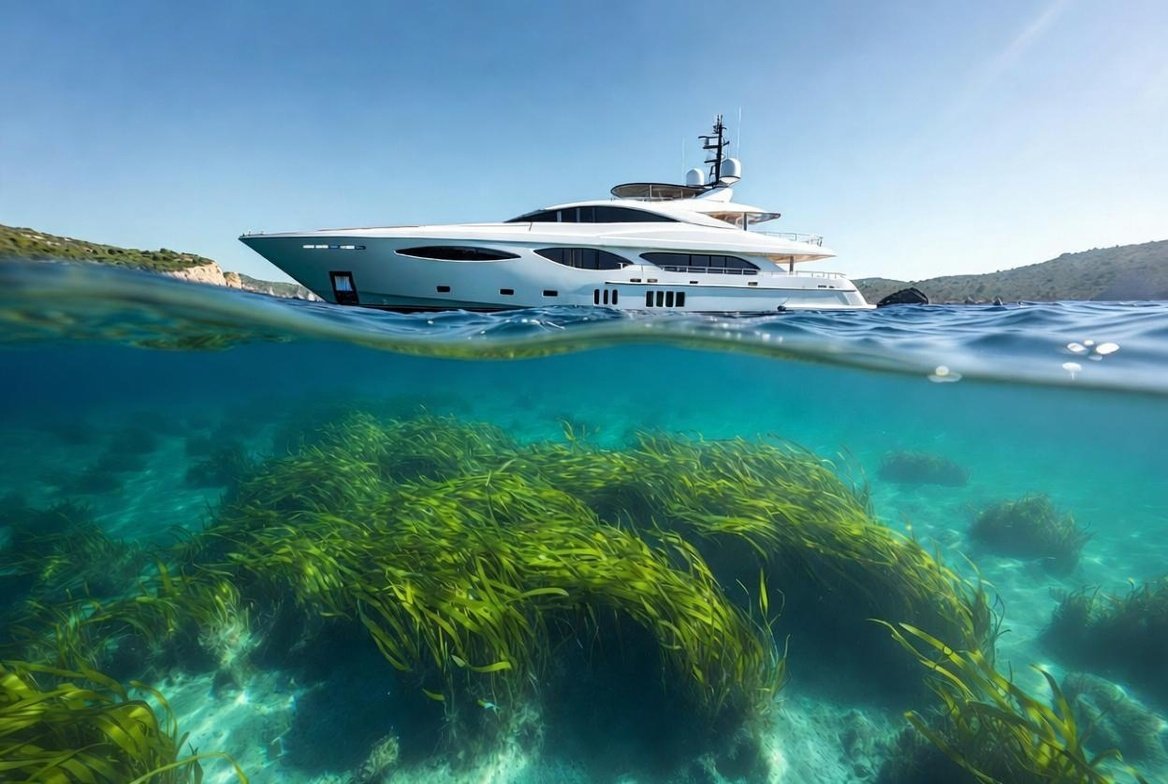
France, in particular, has implemented strict rules to protect Posidonia oceanica, a species of seagrass often called the “lung of the ocean.” This vital plant has an incredibly high carbon absorption capacity, but it grows so slowly that once a meadow is damaged by an anchor, it can take up to a thousand years to restore. The regulations, which apply to yachts over 24 meters, are enforced with uncompromising severity.
Fines for anchoring in a protected Posidonia meadow can reach up to EUR 150,000, with the potential for imprisonment and a ban from navigating in French Mediterranean waters. This is not an idle threat. In one recent case, a yacht captain was fined EUR 20,000 and banned from the region for a year for repeat offenses.
This regulatory whiplash in Greece underscores a broader trend: navigating the Mediterranean now involves threading a needle through a maze of bureaucratic tripwires. For a modern captain, a folder of regional decrees and a nautical chart detailing protected seabeds have become as critical to study as any piracy risk map.
4. Many Security Rules are Deemed “Ill-Considered Bureaucracy”
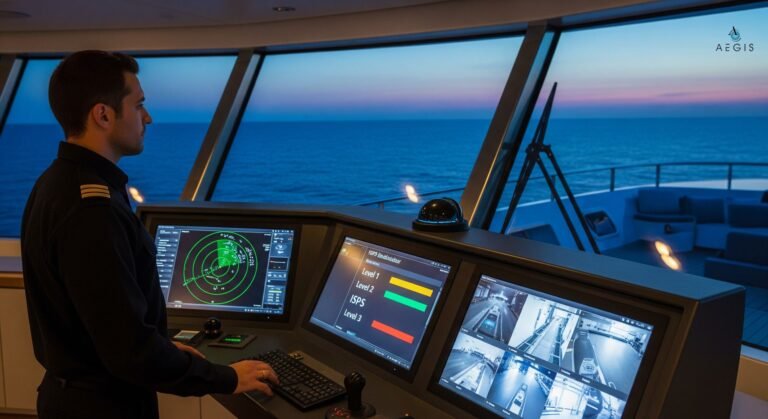
The foundational security framework for the maritime world is the International Ship and Port Facility Security (ISPS) Code, a comprehensive set of measures created in the wake of the 9/11 terrorist attacks. It is mandatory for commercial yachts over 500 gross tons and dictates everything from access control to emergency drills. Yet, within the superyacht industry, its application is viewed with a surprising degree of skepticism.
“Neither passenger ships nor yachts have ever been used as a base for a terrorist attack and most professionals within the yachting industry think the rules to be an example of ill-considered bureaucracy.”
This sentiment reveals a striking paradox. Despite viewing the rules as overly bureaucratic, the industry also understands that “the rules carry great force” and that there are “large penalties” for non-compliance. What’s more fascinating is a recent shift in mindset: many owners of yachts that are not legally required to follow the ISPS Code are now seeking voluntary compliance.
This paradox reveals an industry grappling with its own identity. While professionals may privately scoff at regulations born from terrestrial fears, the drive for voluntary compliance demonstrates a deep, intrinsic understanding of risk that transcends mere paperwork. It signifies a mature market where the ultimate goal is not just meeting legal minimums, but achieving a state of genuine, defensible security.
5. High-Tech Defenses Are Straight Out of a Spy Movie
To counter the array of modern threats, superyachts are being equipped with security technology that rivals a Hollywood blockbuster. This is not about armed guards alone; it’s about creating an integrated, multi-layered defense system that can detect, deter, and defeat threats before they ever reach the deck.
The arsenal of advanced technology found on a modern superyacht includes:
- Anti-Drone Systems: Sophisticated technology like the AeroSentry Marine system can detect a drone from up to 2km away and establish an electronic “exclusion zone” around the yacht to neutralize it.
- Underwater Sonar: An underwater sonar ‘net’ that detects and tracks approaching divers or mini-submarines, turning the opaque depths into a transparent field of surveillance.
- Acoustic Deterrents: Long-Range Acoustic Devices (LRADs) capable of emitting a painful, high-intensity sound beam to repel approaching pirate skiffs without firing a shot.
- Deck-Embedded Sensors: Pressure-sensitive sensors embedded within the yacht’s decking, capable of detecting the phantom footsteps of an intruder and automatically training cameras on their exact location.
- Cloaking Systems: Mist or smoke-based systems designed to completely obscure the vessel, confusing attackers and buying precious time for a response.
Yet, for all this overwhelming technology, the most effective deterrence can still be found in clever, low-tech ingenuity. On one transit through the pirate-infested waters of the Gulf of Aden, a yacht crew famously built their own fake gun to mount on the bow. The convincing replica made their pleasure craft appear more like a military vessel, a simple but effective psychological deterrent. These measures show that modern yacht defense is a sophisticated strategy combining cutting-edge technology with creative problem-solving.
Navigating a New World of Risk
Superyacht security has evolved far beyond the romantic notion of fighting off pirates. Today, it is a complex, multi-front battle against digital ghosts, invisible environmental boundaries, bureaucratic tripwires, and sophisticated criminal enterprises. The threats are more diverse, the stakes are higher, and the solutions are more technologically advanced than ever before.
In this new era, a yacht’s safety depends as much on its cybersecurity firewalls and its captain’s knowledge of local regulations as it does on its physical construction and the readiness of its crew. As these floating palaces become ever more connected and technologically advanced, will the sanctuary they promise ever be truly secure from a world that can reach them with the click of a button?