When we imagine life aboard a superyacht, the picture is one of serene escape: sun-drenched decks, tranquil turquoise waters, and absolute privacy. It is the ultimate expression of freedom, a personal kingdom that can navigate the globe far from the complexities of the modern world. This fantasy of effortless luxury, however, is maintained by a reality that is anything but simple.
Beneath the polished teak and behind the bespoke interiors lies a hidden world of military-grade technology and strategy, locked in a constant battle of opposing forces. It is a world of inherent conflict, where the demand for total connectivity creates the greatest vulnerability, where the push for sustainability collides with the physics of ballistic protection, and where the ultimate mandate is to make it all completely invisible. Here, the greatest threat might not be a pirate’s skiff, but a guest’s smartphone.
In this article we try to provide some insights into this unseen world of high-stakes protection. Beyond the visible crew and security details, a deeply integrated network of structural, digital, and human defenses operates in stealth. Here, we reveal some of the most impactful security measures that define the modern superyacht experience. AEGIS Maritime provide security guidance and assessment at all levels of design and construction of todays mega and superyacht security systems.
The Panic Room (Citadel) That Can Drive the Yacht
The concept of a panic room on a superyacht has evolved far beyond a reinforced closet. The modern equivalent, known as a “Citadel,” is a fortified, standalone refuge engineered as an integral part of the yacht’s structure. Shipyards like Oceanco strategically place these rooms in the most protected areas, often on the lower deck or even below, to maximize structural defense.
Constructed with bullet-proof and fire-resistant materials, the Citadel is designed for multi-hour endurance, featuring its own independent life support, ventilation, and communications. But its most astonishing capability is that it functions as a secondary command center. From within this secure cocoon, the owner or captain can access independent satellite communications and, most critically, take overriding control of the vessel’s navigational systems. This ensures that even if the bridge is compromised, control is never lost.
Advanced designs take contingency planning even further, with dedicated escape passages leading from the Citadel to a beach area or swim platform. For the ultimate extraction, a submersible can be deployed as a rapid escape-pod, transforming a defensive refuge into a gateway to survival.
The Biggest Threat Isn’t a Pirate, it’s the Wi-Fi
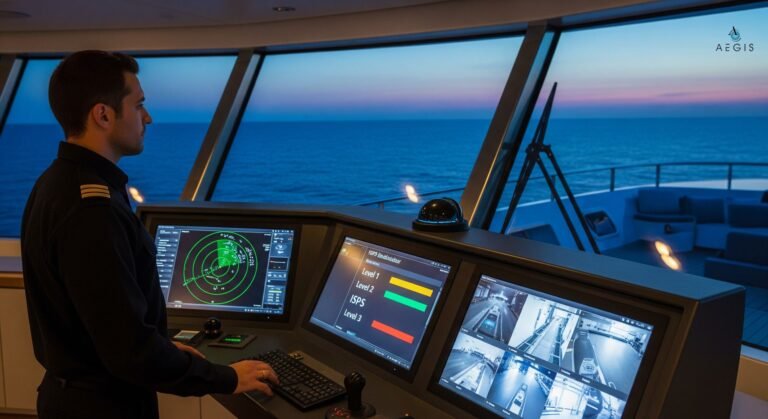
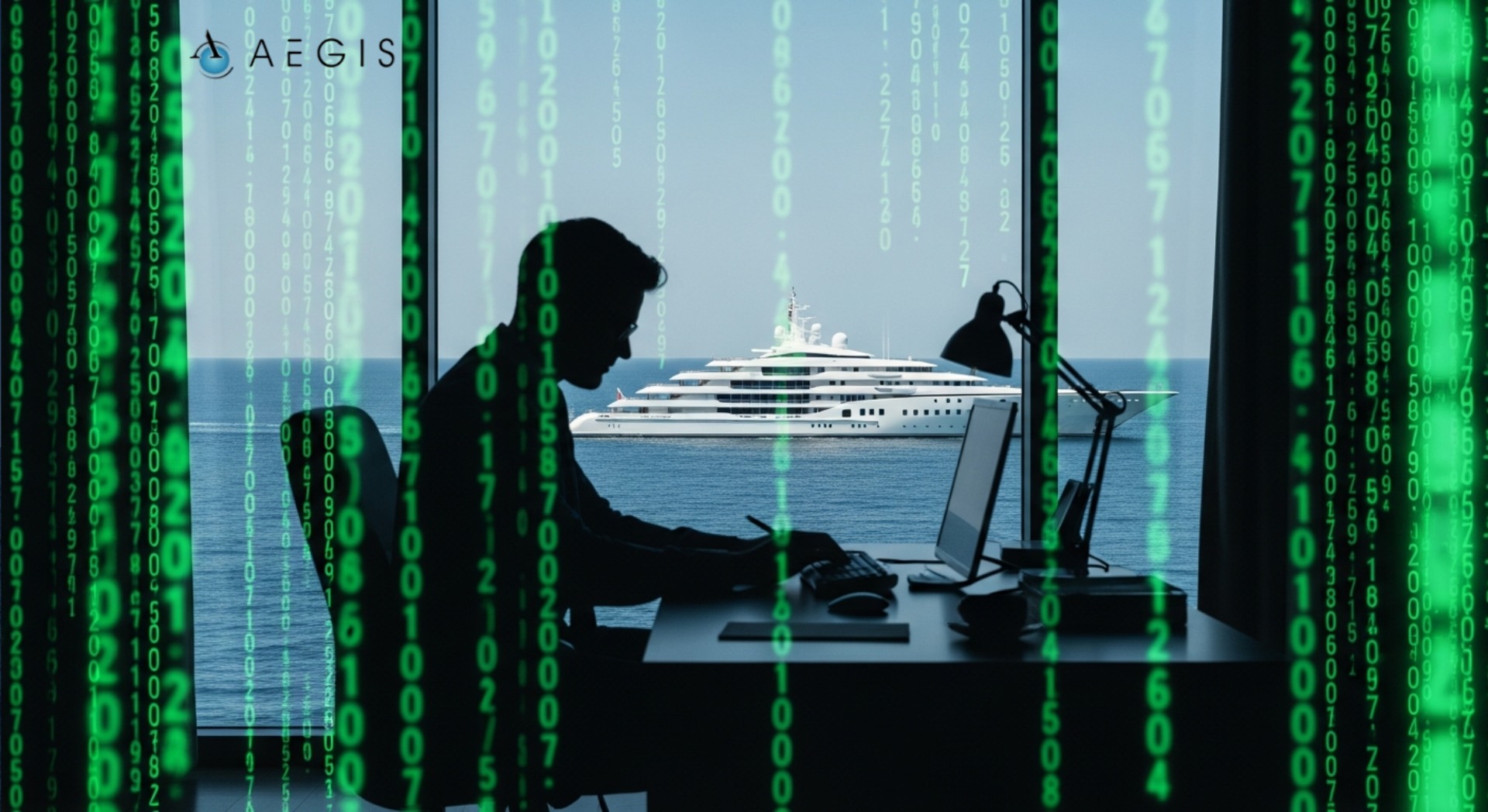
While physical threats remain a concern, the most pervasive danger to a modern superyacht is digital. Unlike commercial shipping, the private marine sector is less regulated, leaving owners to navigate a complex and evolving cyber threat landscape on their own. This reality is changing fast. As of January 1, 2024, new IACS Unified Requirements (UR 26 and 27) make cyber-resilience a legal mandate for all classed superyachts, forcing the issue from an afterthought to a foundational requirement.
The core vulnerability lies in IT/OT convergence, where guest-facing systems (IT, like Wi-Fi and entertainment) are networked with the yacht’s core Operational Technology (OT) systems (navigation and engine management).
This creates a vast attack surface where a single weak point—malware propagating from an infected crew device, a connection to an untrusted marina Wi-Fi network, or an unpatched software update—can compromise the entire vessel.
The risks are profound and include:
- GPS Spoofing: Hijacking the yacht’s navigation to send it off-course.
- Ransomware: Locking crews out of critical systems until a payment is made.
- Phishing: Tricking crew into revealing sensitive credentials or access codes.
As experts caution, the human element is often the weakest link in this digital chain. “Most breaches happen because of people rather than problems with technology.”
The Yacht Is Bulletproof—But Fights a War Against Weight
For owners operating in high-risk regions, superyachts can be fitted with bespoke, bullet-resistant armor capable of withstanding threats up to sniper rounds and AK-47 fire. The core principle of this protection, delivered by specialists like ASL GRP, is absolute discretion. The armor is engineered to be completely invisible, hidden seamlessly behind the luxurious interior fit-out of a master suite, crew areas, or the entire hull.
This introduces a fundamental conflict in modern naval architecture. The immense weight of traditional armor directly opposes the industry-wide push for “lightweighting”—a trend focused on reducing weight to improve fuel efficiency and sustainability.
The solution is found in advanced material science. Naval architects now integrate lightweight composite ballistic materials, such as Dyneema fibers, directly into the yacht’s structure. Using Finite Element Method (FEM) analysis to model ballistic impacts, they can weave in military-grade defense without the debilitating weight penalty, allowing a yacht to be both a green-conscious vessel and a hardened fortress.
The Crew Are Trained for Hostage Situations
Even the most advanced technology is insufficient without a highly capable human element. In the world of elite security, a well-educated crew is the most valuable asset, forming the first and last line of defense. This goes far beyond standard maritime certifications.
Superyacht crews undergo intensive security training from specialist firms staffed by personnel with elite military backgrounds. A prime example is AEGIS Maritime, founded by Tony Robinson. His team prepares crews to handle any conceivable threat professionally and effectively.
The curriculum is as serious as it sounds, with specialized courses that underscore the high stakes involved. These are not theoretical exercises but practical preparations for worst-case scenarios, including:
- Hostage Situation
- Evasive Maneuvering
- Anti – Robbery Techniques
This focus on the human factor reinforces a core tenet of modern security: the best way to resolve a crisis is to prevent it from happening in the first place. A crew trained to identify and mitigate threats is the ultimate proactive defense system.
Modern Superyacht Design now includes fortress fortifications
The ultimate luxury aboard a superyacht is not found in the marble finishes or the onboard cinemas, but in the promise of absolute peace of mind. This is achieved by resolving a series of profound conflicts: balancing the desire for total connectivity against the need for digital security, meeting sustainability goals without sacrificing physical protection, and delivering military-grade defense that remains utterly invisible. Every measure is designed to operate in stealth, ensuring that the owner’s experience remains one of pure, unadulterated freedom.
The fusion of impenetrable defense with exquisite luxury is the new standard. As technology and threats continue to evolve, what will the next frontier of invisible security look like, and at what point does a sanctuary become a fortress? For a confidential conversation on any aspect of crew security training or security systems design, drop us a line. Here at AEGIS Maritime, we can help.