1. Introduction: The High Cost of Dropping Anchor in the Wrong Place
A single mistake when dropping anchor in French waters can now cost up to €150,000. Since 2024, maritime authorities have intensified the enforcement of anchorage regulations, making strict compliance more critical than ever for superyachts over 24 meters, whose heavy anchors and chains can cause irreparable harm to the fragile seabed. Navigating these protected zones is no longer a minor logistical detail; it is a fundamental aspect of modern seamanship. For the professional captain, understanding and adhering to these rules is about protecting one’s career, the owner’s asset, and the future of yachting in a region that is now under intense regulatory scrutiny.
2. The “Lungs of the Ocean”: Why France is Protecting its Seabed
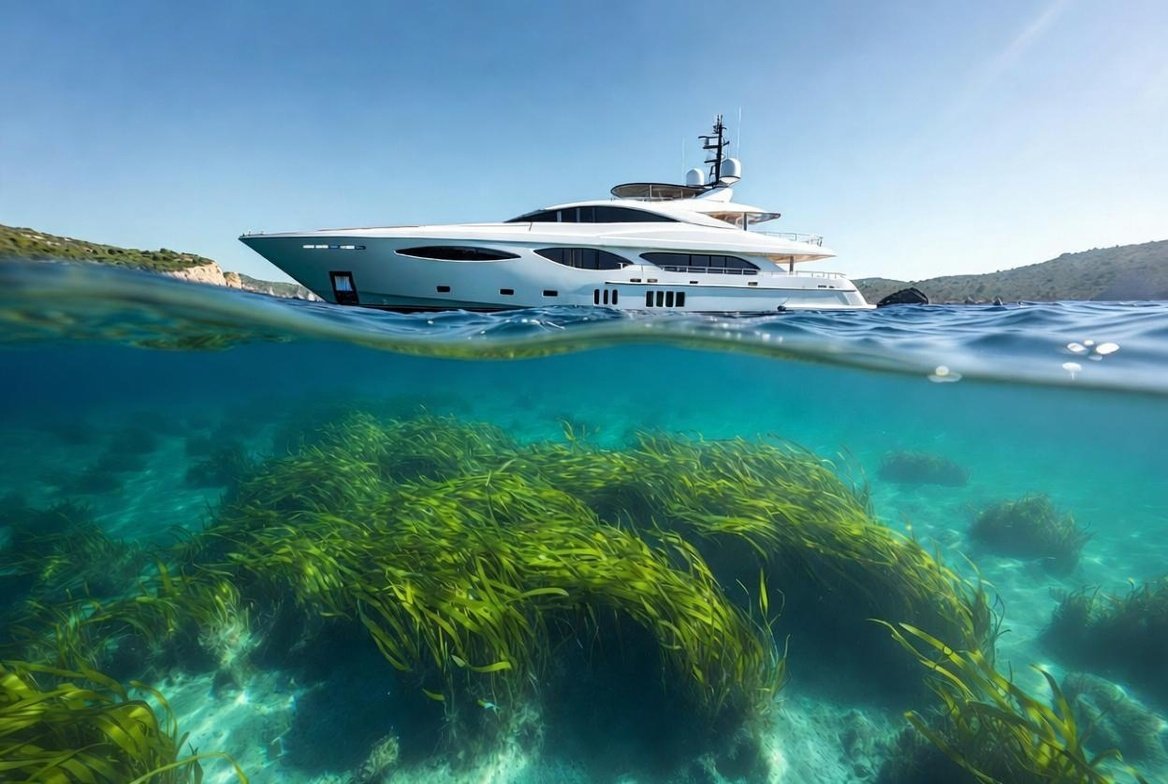
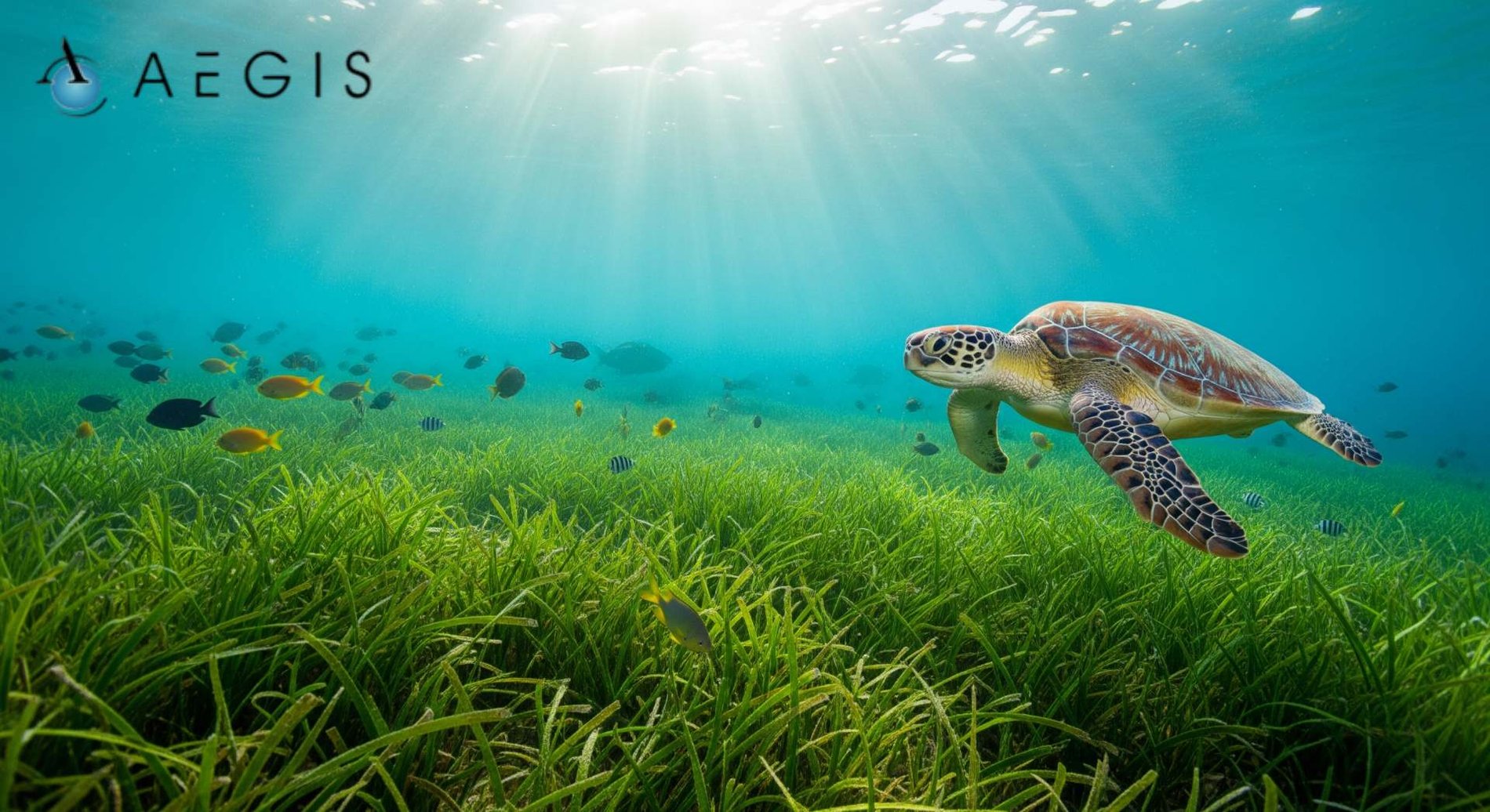
The ecological reasoning behind France’s stringent regulations centers on the protection of a vital marine seagrass known as Posidonia oceanica. Often referred to by marine conservationists as the “lung of the ocean,” this plant is the cornerstone of the Mediterranean’s marine health. Its fragility is matched only by its importance.
The vital functions of Posidonia include:
- Playing a vital role in oxygen production.
- Having a very high carbon absorption capacity.
- Being vital for the Mediterranean ecosystem.
Posidonia grows incredibly slowly, and once a meadow is damaged, recovery is a generational affair. It can take hundreds, or in some cases up to one thousand years, for a meadow to restore itself, making prevention the only viable conservation strategy.
3. The Heavy Hand of the Law: Penalties and a Cautionary Tale
The consequences for anchoring in a protected Posidonia meadow are severe. Violators face a fine of up to €150,000, the possibility of imprisonment, and a ban from navigating in French Mediterranean waters.
These are not empty threats. In October 2023, the captain of a 26-meter yacht was convicted by the Maritime Court of Marseille for a pattern of non-compliance. After disregarding anchorage regulations twice in Cannes in 2021 and a third time in Saint Tropez in 2022, the captain was fined €20,000 and banned from French waters for an entire year. While this initial fine is significant, it is a fraction of the €150,000 maximum. Captains should see this not as a ceiling, but as a legal precedent; future violations could attract penalties far closer to the statutory maximum. The court is still assessing the economic value of the ecological damage, which may lead to further financial penalties.
4. A Superyacht’s Footprint: The Mechanics of Seabed Damage
The regulations specifically target yachts over 24 meters in length for a clear mechanical reason: their anchoring systems pose a disproportionate threat to the fragile seabed. The damage to Posidonia meadows is not caused simply by the anchor dropping. Significant destruction occurs when the heavy anchor or its long, heavy chain is dragged across the seafloor, especially during retrieval.
The physics are straightforward: bigger yachts have heavier anchors and longer chains. This increased weight and scope results in a larger, more destructive footprint, uprooting and shredding the slow-growing plants with devastating effect.
5. Navigating Compliance: The Captain’s Digital Toolkit
Staying compliant requires vigilance and the use of modern digital tools. It is mandatory for captains and yacht owners to operate with current nautical charts that clearly delineate the restricted zones.
To ensure you are anchoring in a permitted area, the following resources are essential:
- Official Charts: New charts are published by SHOM (Service Hydrographique et Océanographique de la Marine Françaises) and are a non-negotiable part of your bridge equipment.
- Essential Apps: The Donia and Nav & Co applications display the restricted areas on mobile devices. As the official application produced by French maritime authorities, Nav & Co is constantly updated with new regulations as they are adopted, making it the most reliable tool for real-time compliance.
In addition to these navigational aids, French authorities are increasing the availability of eco-friendly alternatives, such as bookable mooring buoys, providing a clear and safe option for larger yachts.
6. The Captain’s Log 2.0: Your Best Legal Defense
Beyond charts and apps, there is one crucial, proactive step every captain must take for absolute legal protection. Before dropping anchor, directly communicate with the relevant sémaphore (the official coastal radio station) on VHF Channel 16 or by phone to state your position and request confirmation that your intended anchorage is compliant.
This action carries significant legal weight, as all conversations with a sémaphore are officially recorded. However, with authorities levying fines based on human observation from aircraft, boats, or land—which can lead to arbitrary decisions—you need your own irrefutable record. For your own protection, it is critical to record the conversation yourself. This recording is not just a good idea; it is a non-negotiable act of professional self-preservation, creating verifiable evidence that proves you performed due diligence and received clearance.
7. Final Word: Professionalism in a Protected Paradise
While the penalties for non-compliance are severe, the tools for ensuring adherence are readily available. The era of anchoring by sight alone in the French Mediterranean is over. Ultimately, protecting the “lungs of the ocean” is no longer just an ecologist’s plea; it is a legal requirement enforced by modern surveillance, a technical challenge solved by digital tools, and the defining standard of professional seamanship in the French Mediterranean. By embracing these practices, we not only avoid fines but also help preserve the pristine beauty of the waters that make this region the capital of the yachting world.